King Charles III’s Speech to Congress: What It Tells Us About America at 250
June 2026 Imperfect Union
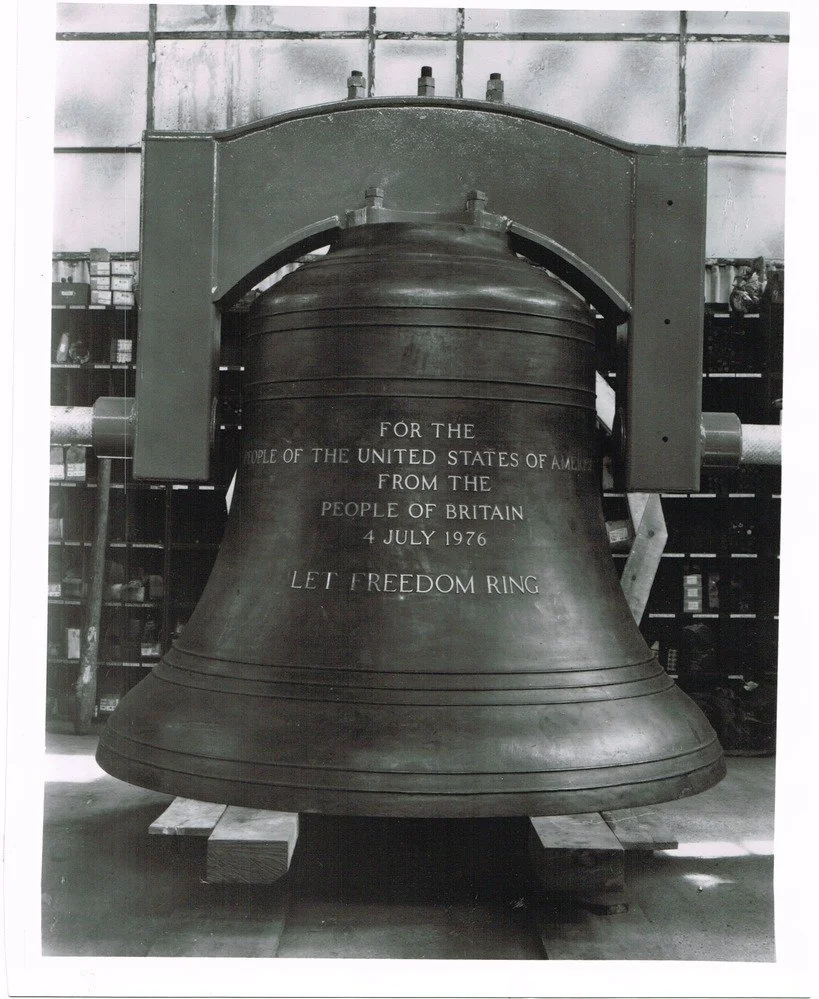
On July 6, 1976, Queen Elizabeth II arrived in the United States for a state visit to commemorate the nation’s bicentennial. In Philadelphia, she gifted the nation a new bell, forged at the same foundry as the Liberty Bell. The new bell has “Let Freedom Ring” inscribed on the side. Queen Elizabeth said in her remarks, “It is a message in which both our people can join and which I hope will be heard around the world for centuries to come.”
As I was thinking about what to write for the last newsletter before the official 250th holiday, I couldn’t help but dwell on the parallel visits of Queen Elizabeth and King Charles III earlier this year. Their remarks offered similar sentiments about the United States, democracy, and the special Anglo-American relationship. But King Charles’s speeches spoke to our current moment in a way that was unusual for the British monarchy.
I think their remarks are also well timed for the moment and a good reminder of the value of a head of state (not necessarily a monarch, more on that below). This message is the one I want Americans to hear, and I want the world to hear in 2026, and there are all kinds of irony in that claim.
When delivering the bell in Philadelphia, Queen Elizabeth II’s message emphasized that July 4 should be celebrated in both the United States and Great Britain. “Not in rejoicing at the separation of the American Colonies from the British Crown,” she explained, “but in sincere gratitude to the Founding Fathers of this great Republic for having taught Britain a very valuable lesson.”
She attributed the loss of the colonies to a lack of statesmanship, a lack of knowing “the right time, and the manner of yielding, what is impossible to keep. But the lesson was learnt,” she continued. “In the next Century and a half we kept more closely to the principles of Magna Carta which have been the common heritage of both our countries.”
In both Philadelphia and Boston, where she went next, the Queen emphasized the shared commitment to “defense of our common heritage of freedom.” She speculated that the Founders “would also have been pleased to know that eventually we came together again as free peoples and friends and defended together the very ideals for which the American Revolution was fought.”
She closed her speech by referencing an iconic moment in Boston’s history. “At the Old North Church last year, your president lit a third lantern dedicated to America’s third century of freedom and to renewed faith in the American ideals. May its light never be dimmed.”
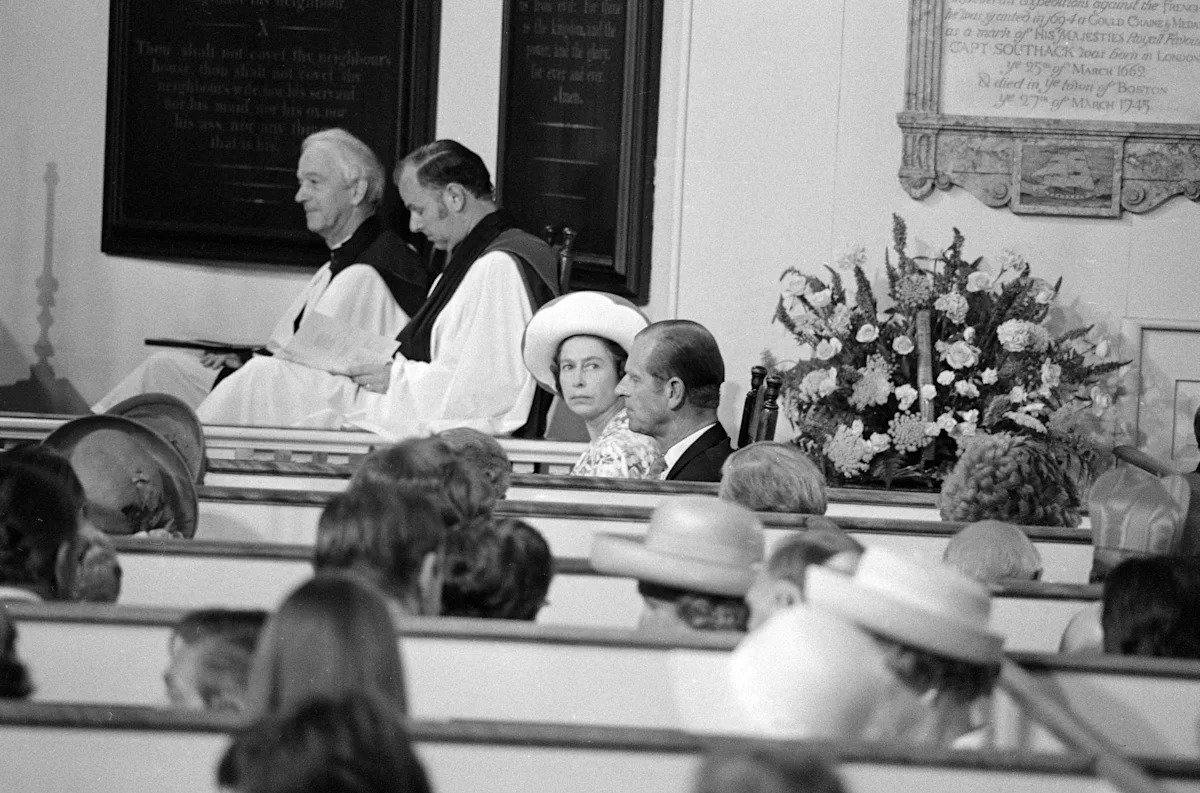
Queen Elizabeth II at Old North Church.
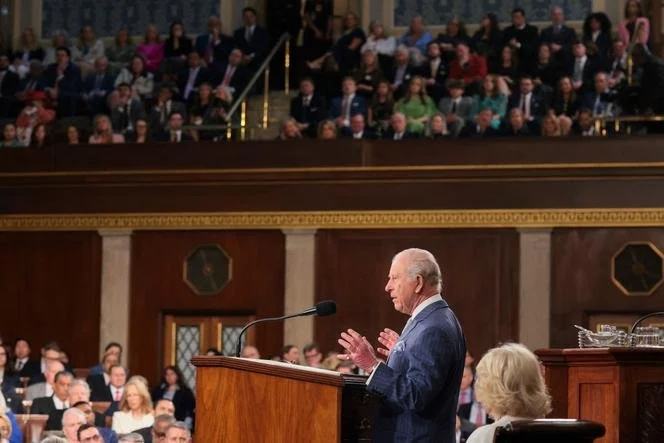
Fifty years later, King Charles III spoke in the House Chamber and at the White House during his state visit. He offered similar reflections on the shared history of the two nations. In Congress, he said, “Whatever our differences, whatever disagreements we may have, we stand united in our commitment to uphold democracy, to protect all our people from harm, and to salute the courage of those who daily risk their lives in the service of our countries. Standing here today, it is hard not to feel the weight of history on my shoulder because the modern relationship between our two nations and our own peoples spans not merely 250 years but over four centuries.”
“As I look back across the centuries, Mr. Speaker, there emerge certain patterns, certain self-evident truths from which we can learn and draw mutual strength. With the spirit of 1776 in our minds, we can perhaps agree that we do not always agree, at least in the first instance…we can discern that our nations are in fact instinctively like-minded, a product of the common democratic legal and social traditions in which our governance is rooted to this day. Drawing on these values and traditions time and again our two countries have always found ways to come together.”
At the White House, he reiterated: “The story of Britain and America is one of reconciliation, from adversaries to the closest of allies; not always, perhaps, following the straightest path. As you said yourself, Mr President, during your own State Visit at Windsor Castle last year, ours is an unbreakable bond of history and heritage, culture and commerce, industry, and invention – and we are determined to face the future together.”
But the King’s remarks offered much more pointed substance. He said, “I come here today with the highest respect for the United States Congress. This citadel of democracy created to represent the voice of all American people to advance sacred rights and freedoms.” Granted, he was speaking to Congress, but he did not speak about the presidency. His remarks were a far cry from the concept of an all-powerful executive that dominates our political life. “It is here in these very halls that this spirit of liberty and the promise of America’s founders is present in every session and every vote cast. Not by the will of one, but by the deliberation of many, representing the living mosaic of the United States in both of our countries.”
He continued, “250 years ago, or as we say in the United Kingdom, just the other day, they declared independence by balancing contending forces and drawing strength in diversity. They united 13 disparate colonies to forge a nation on the revolutionary idea of life, liberty, and the pursuit of happiness. They carried with them and carried forward the great inheritance of the British Enlightenment as well as the ideals which had an even deeper history in English common law and Magna Carta…Our Declaration of Rights of 1689 was not only the foundation of our constitutional monarchy but also provided the source of so many of the principles reiterated, often verbatim in the American Bill of Rights of 1791.”
He noted that the U.S. Supreme Court Historical Society calculated that Magna Carta is cited in at least 160 court cases, not least “as the foundation of the principle that executive power is subject to checks and balances.”
Imagine that. The King of Great Britain reminding Congress to do its job and check the executive. The previous Charleses would have had a few things to say. (Just a reminder that King Charles I was executed during the English Civil War between Parliament and Royal forces. King Charles II dissolved Parliament in 1681 and died in 1685. He was succeeded by his brother James II, who was deposed in the Glorious Revolution in 1688).
But King Charles III wasn’t done. He also spoke directly to current American foreign policy. He reminded American listeners that NATO’s Article 5 defense clause has only been invoked once—in the days after 9/11. “In the face of terror, we answered the call together as our people have done so for more than a century, shoulder-to-shoulder through two world wars, the Cold War, Afghanistan, and moments that have defined our shared security. Today, Mr. Speaker, that same unyielding resolve is needed for the defense of Ukraine and her most courageous people….”
He continued to place the fight in Ukraine within the Anglo-American tradition. “From the bitter divisions of 250 years ago, we forged a friendship that has grown into one of the most consequential alliances in human history. I pray with all my heart that our alliance will continue to defend our shared values with our partners in Europe and the Commonwealth and across the world and that we ignore the clarion calls to become ever more inward-looking.”
He closed: “America’s words carry weight and meaning as they have since independence. The actions of this great nation matter even more.”
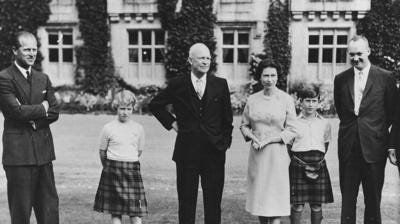
Eisenhower visiting Balmoral, where a young Prince Charles met his first president.
At the White House, he reiterated this message. “The first President I had the honour of meeting…was President Eisenhower, who had served as the Supreme Commander of the Allied Expeditionary Forces during World War II at a most critical time in the darkest days of the 20th century. American leadership helped rebuild a shattered continent, playing a decisive role as a defender of freedom in Europe. We – and I – shall never forget that, not least as freedom is again under attack following Russia’s invasion of Ukraine…. Today, our partnerships in NATO and AUKUS deepen our technological and military cooperation and ensure that, together, we can meet the challenges of an increasingly complex and contested world.”
In the days leading up to the state visit, I listened to several British foreign policy commentators speculate about what the King might say. They predicted Charles would speak to the special relationship between the US and the UK and urge the president to remain a good ally. They anticipated he would make this plea in the traditionally subtle and nuanced rhetoric typically deployed by British monarchs.
In the last two centuries, the British monarchy has increasingly removed itself from the day-to-day battles of partisan politics. If you are a fan of the show The Crown, you know that they have preferences, but keep them to themselves most of the time. (Fictional embellishment, yes, but on that point accurate). They are heads of state—they comfort in times of grief, rally in times of crisis, and steady in periods of instability.
Abroad, British kings and queens largely focus on boosting alliances. They are weapons of soft power.
The comments above by King Charles were anything but subtle. He spoke directly to Congress’s utter failure to practice oversight. He reminded the nation of its responsibility around the globe. The reminder is timely. We can’t preen about our role as the inspiration for and beacon of democracy around the world and abandon other democratic allies. We either are an inspiration, or we aren’t.
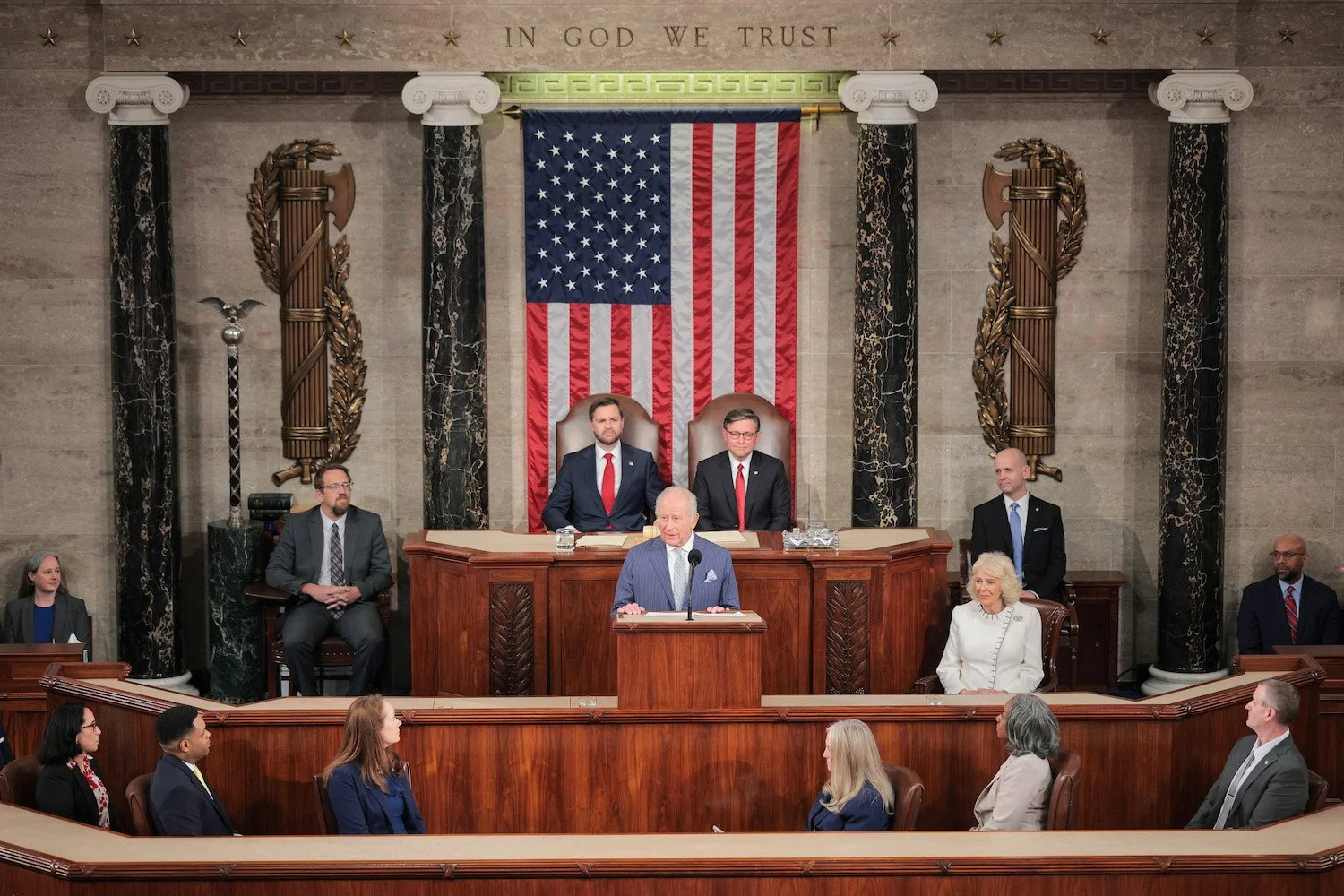
I thought it was a remarkable moment of statesmanship. Admittedly, that type of moment is harder for presidents in the twenty-first century. The needs of party leadership and the demands of the executive branch often conflict with the responsibilities of the head of state. But big moments like the 250th require it. In 1976, one of Ford’s campaign songs was “I’m Feeling Good About America” as a nod to the bicentennial. In 2026, it was up to the King of Britain, the descendant of King George III, reminded us what we can do.