Every 50 Years, America Falls Apart. Then Celebrates Anyway.
May 2026 Imperfect Union
Last week, I moderated a conversation with Robert Parkinson, Michael Auslin, and Jim Rasenberger about their new books on the Declaration of Independence and July 4 at the George Washington Presidential Library. My final question asked them what they wanted to see this year for the 250th semiquincentennial anniversary. But I set it up by listing all the previous commemorations: 1826, 1876, 1926, 1976….
Those are generally not considered particularly good years or even particularly good decades for the United States. As I was preparing for the event, I got thinking about this run of dates. What is it about the nation that make our commemorations fall at these tense or difficult times? What have past generations done with those celebrations and what does that say about us? We didn’t really have time to dig into it on the panel, but it has stuck with me.
Let’s start by going through those decades as a quick refresher.
In 1826, the Missouri Compromise was a recent memory. In 1820, the Senate was evenly split between 11 free and 11 slave states. Missouri had petitioned for statehood in 1818, but an anti-slavery representative from New York added an amendment to the statehood bill, prohibiting slavery in the new state. The Senate killed the bill.
Two years later, Missouri again petitioned for statehood. This time, Speaker of the House Henry Clay engineered a compromise that welcomed Missouri into the Union as a slave state and Maine as a free state—preserving the balance in the Senate. The bill also drew a line across the Union, marking the land above the 36th parallel as free and the land below as slave territory. When pro-slavery House members tried to scuttle the bill the next day, Clay declared the motion out of order until the day’s business was finished. He quietly signed the bill and sent it to the Senate.
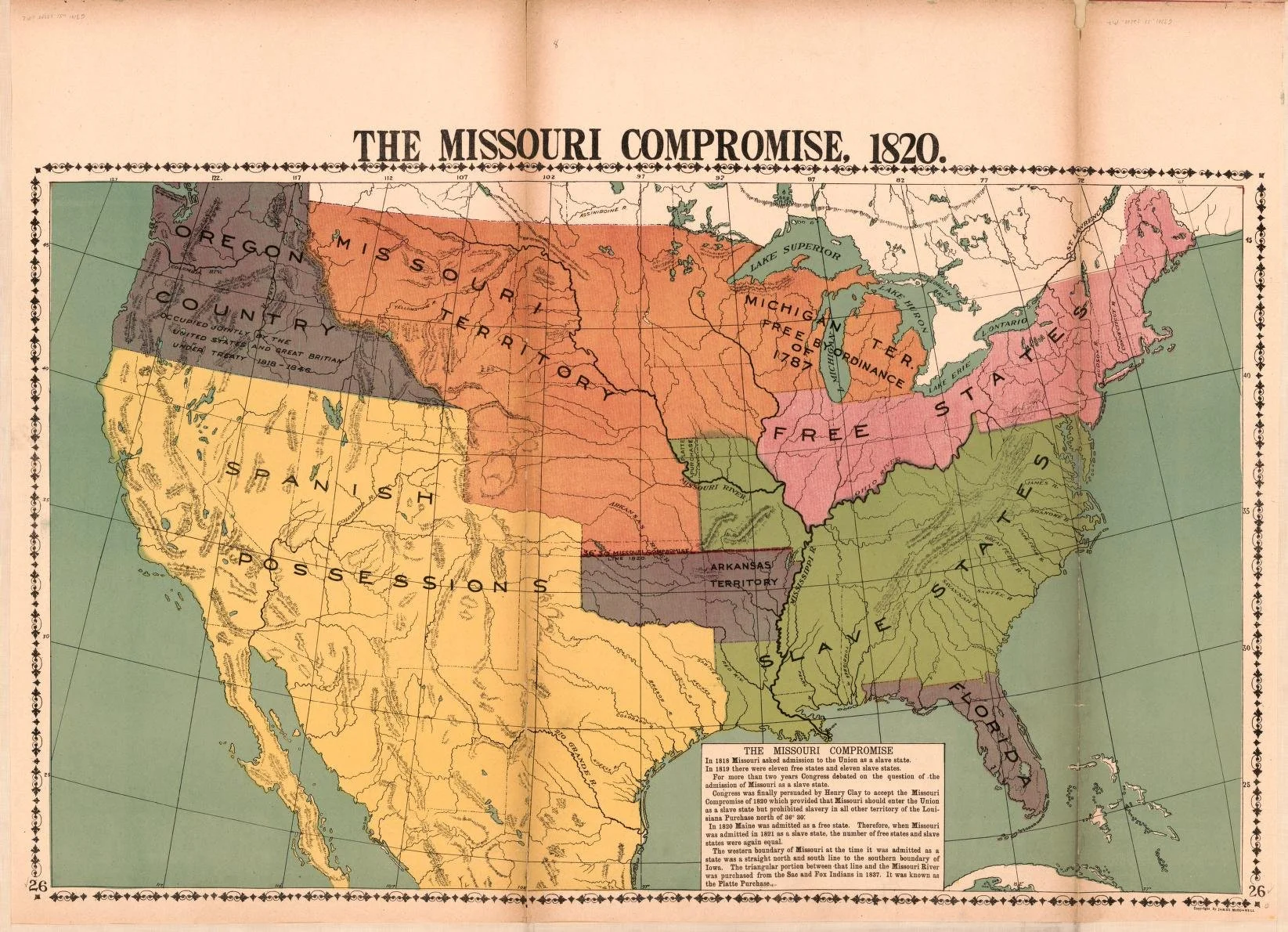
The Missouri Compromise loosely held until the Kansas-Nebraska Act in 1854, but everyone, and I mean everyone knew that it was a temporary solution. As long as there were free and slave states in the Union, enslaved people would seek their freedom and force the issue. Northern states would always be frustrated by the inflated representation for slave states in Congress and the Electoral College based on the enslaved population. These concerns lingered in the background.
As Jelani Cobb wrote about last week, the apocryphal deaths of Thomas Jefferson and John Adams on July 4, 1826 shook the nation. When John Quincy learned of his father’s death, he wrote in his diary, “The time, the manner, the coincidence with the decease of Jefferson, are visible and palpable marks of divine favour.” Perhaps providence had shined on the nation, but many Americans wondered whether the nation would survive without the leadership of the founding generation.
Fifty years later, in 1876, nation had survived a bloody Civil War but bungled the Reconstruction. The assassination of Abraham Lincoln and the disastrous presidency of Andrew Johnson had welcomed unrepentant Confederate secessionists back into the Union. President Ulysses S. Grant had invoked the Ku Klux Klan Act to send American forces into South Carolina to protect Black voters and enforce suffrage. But many northern voters had not supported the Civil War to guarantee equality. They might have opposed slavery and supported the Union, but that is not the same thing as equality. Northern voters steadily grew wearily of the reconstruction project and by 1876, were ready to move on.
The election of 1876 reflected the divided nation. Democrat Samuel Tilden won 184 votes, Republican Rutherford B. Hayes won 165 votes and 20 votes from Florida, Louisiana, and South Carolina were disputed. Congress created an electoral Commission, which awarded Hayes all twenty votes, but split along party lines. The Commission reportedly hatched a deal in which the Democratic Speaker of the House, Samuel Randall, certified Hayes election in return for the withdrawal of federal troops from the South. In reality, Hayes had little control in the South and the public had no appetite for ongoing enforcement.
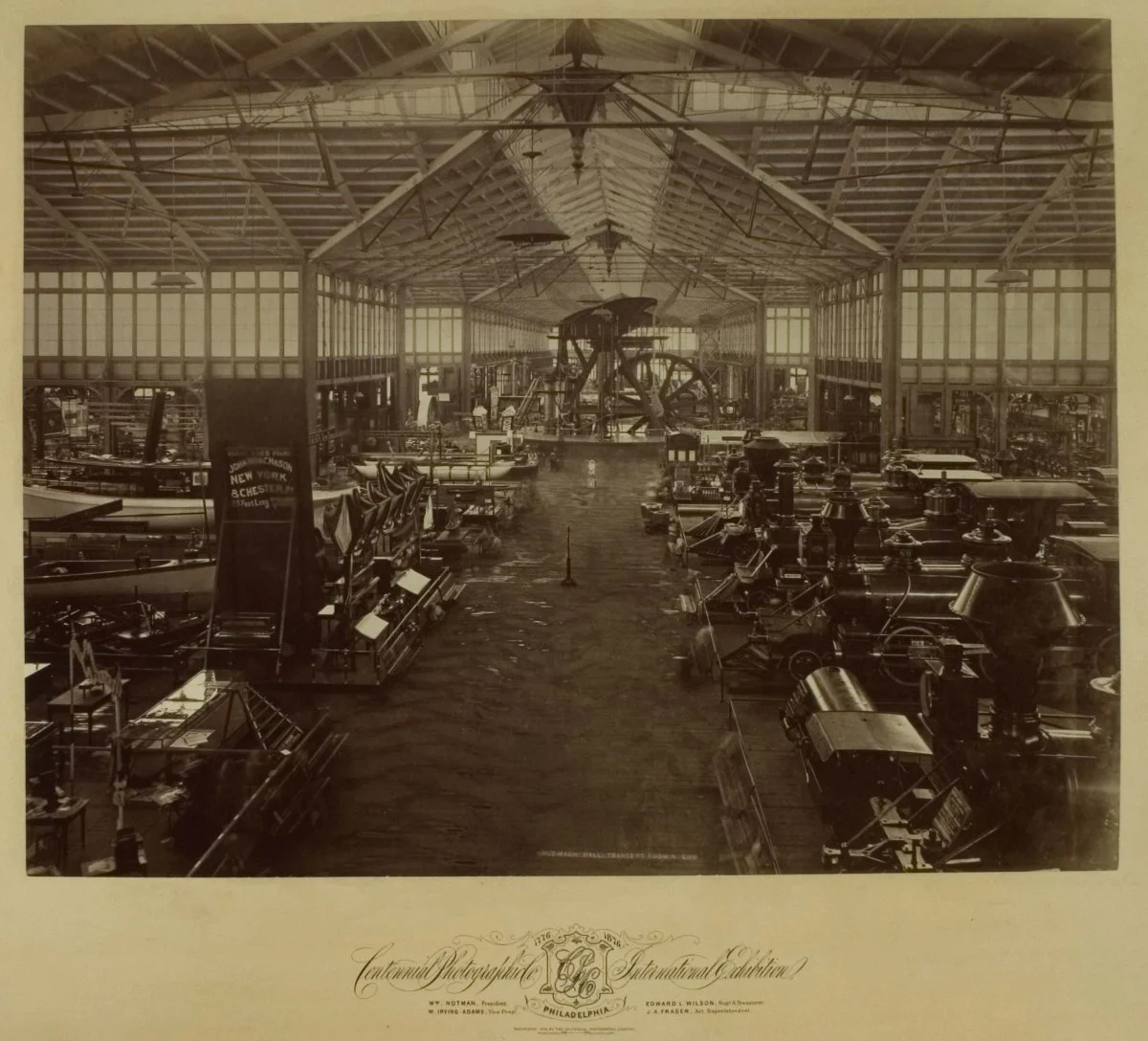
The nation’s celebrations depicted a country at a turning point. The World Fair in Philadelphia, the first world fair hosted in the United States, featured a steam engine and Alexander Graham Bell’s telephone, the new Remington Typewriter, and Heinz Ketchup. The fair depicted a rising global power, boosted by industrialization and astounding population growth. Parades and fireworks in local communities extended the celebrations around the country.
Fifty years later, the United States was in the midst of the rollicking, roaring 1920s. The 1910s witnessed a brutal flu epidemic, the Great War, and massive economic disruption. The shocking loss of life, violence, and destruction of the epidemic and war struck many Americans as pointless. The passage of prohibition and women’s suffrage in 1919, the influx of immigrants, and the rapid rise of industrialization fundamentally reshaped American society. Many Americans responded by defying traditional gender norms, family expectations, or religious confines. Hemlines rose, inhibitions lowered, and new forms of music, entertainment, and bootleg booze exploded in popularity.
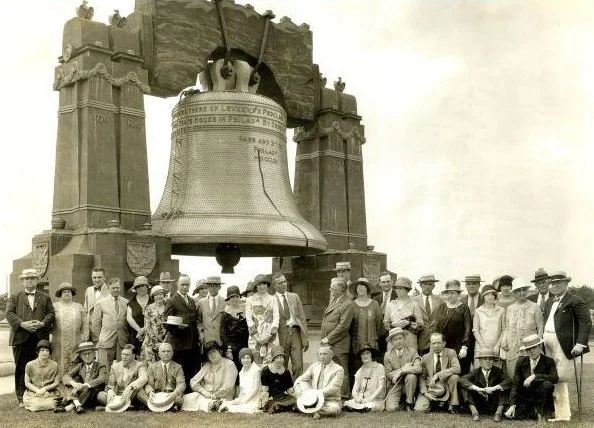
Under the glittery surface of frivolity, the economy teetered dangerously on unstable foundations. Income inequality expanded and crime rates increased. The celebrations reflected the conflicted nature of the national mood. Philadelphia hosted another World Fair, complete with a massive Liberty Bell gate at the entrance lit by 26,000 light bulbs, five “palaces” or exhibition halls, and a recreation of Philadelphia’s High Street with twenty colonial buildings. But Philadelphians themselves were split on the celebrations and an Anti-Sesquicentennial League formed to protest the taxes and public expense required to build the fair. The fair’s reception was mixed, and attendance was disappointing.
The bicentennial in 1976 found the nation reeling from the combined traumas of Vietnam, Watergate, and shocking inflation. Trust in public institutions and government officials was at an all-time low (thus far) and the age of American hegemony after World War II appeared to be in a fatal decline.
The preparations for the 1976 celebrations reflected the chaotic and divided nation. The official commission was a hot mess, politics got in the way, and preparations were scattered and last minute. And yet, when you talk to people today who lived through the bicentennial, they remember the anniversary with such fondness. In her contribution to America at 250, Joanne Freeman wrote about these memories. They wax poetic about the tall ships, they talk warmly about their local celebrations, and they pine for the shared patriotism of 1976—even if those living in 1976 would not have described it that way.
What then should we make of this repeated pattern of national conflict, trauma, and commemoration? Some of it can be explained by normal waves of epidemics, the boom-and-bust cycle of an unregulated economy, immigration trends, and technological changes.
But some of it is embedded in our national character. The founding generation were willing to make compromises because they had skin in the game. They had sacrificed, shed blood, and risked everything to forge a nation and they knew how hard it was. By the 1820s, most of the generation had passed. Similarly, the generation that survived the Civil War shied away from internal conflict. They knew how close the Union had come to destruction and feared a repeat. By the 1920s, many veterans had passed, and younger Americans took national unity for granted. The World War II generation had likewise sacrificed to save democracy and they treasured our imperfect Union.
That generation has passed, and we are once again a complacent society. Many younger Americans don’t believe in democracy and don’t think it is worth fighting for. Maybe the anniversary is an opportunity to inspire the younger Americans, just as 1976 did for a previous generation. It is an opportunity to remind us all of the incredible inheritance of this nation and our collective responsibility to make it more perfect for those who follow.