November 2026 Imperfect Union
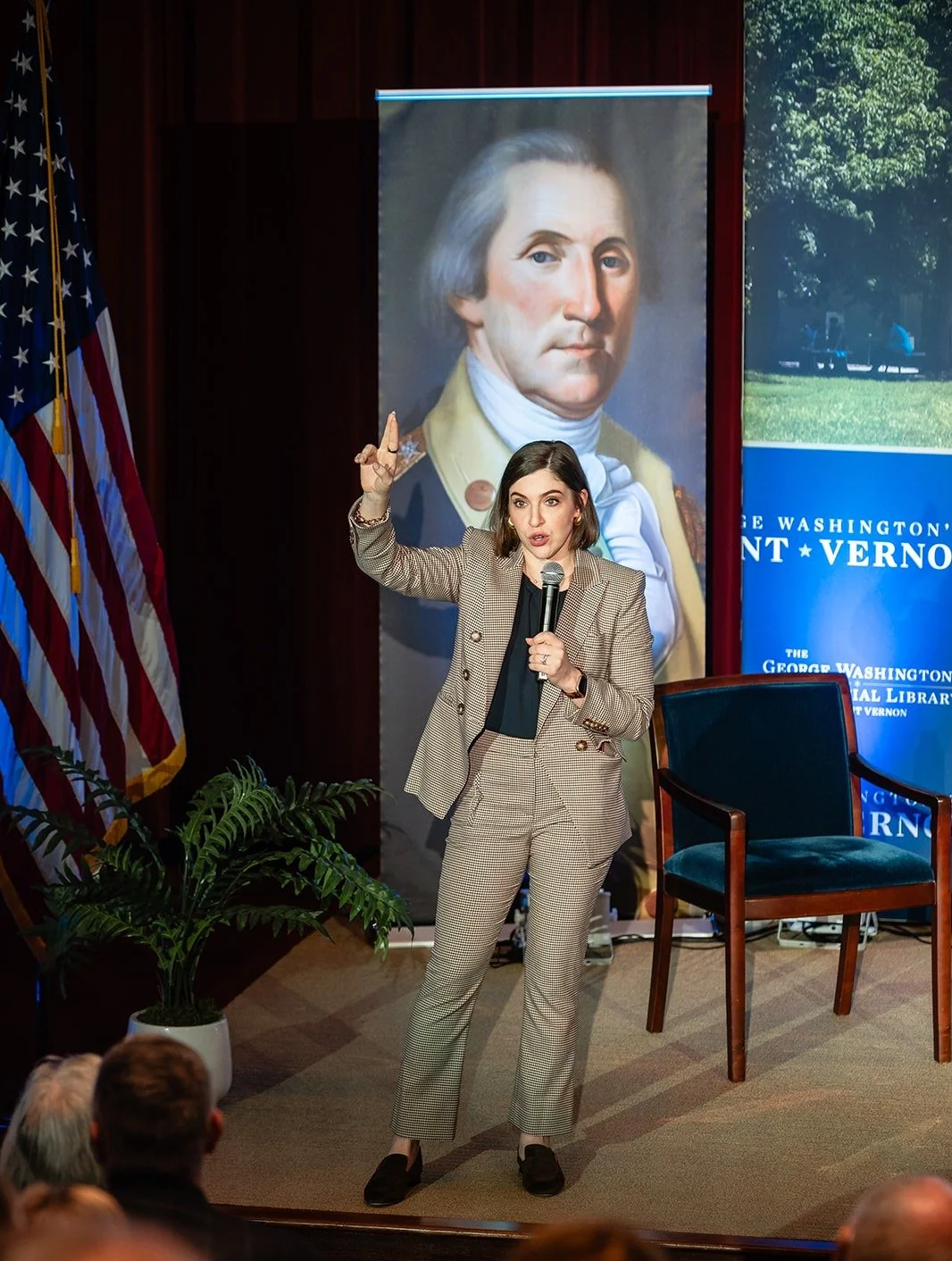
Last weekend, the George Washington Presidential Library hosted the 2026 Democracy Symposium at Mount Vernon. The symposium was the capstone event of the fall schedule and about a year in the making. I am so thrilled with how it turned out—the conversations were excellent, the panelists inspiring, and the community was really engaged. We wanted the audience to come away with real takeaways about what we could do to strengthen the nation’s foundations for the next 250 years. One takeaway for me is the importance of character.
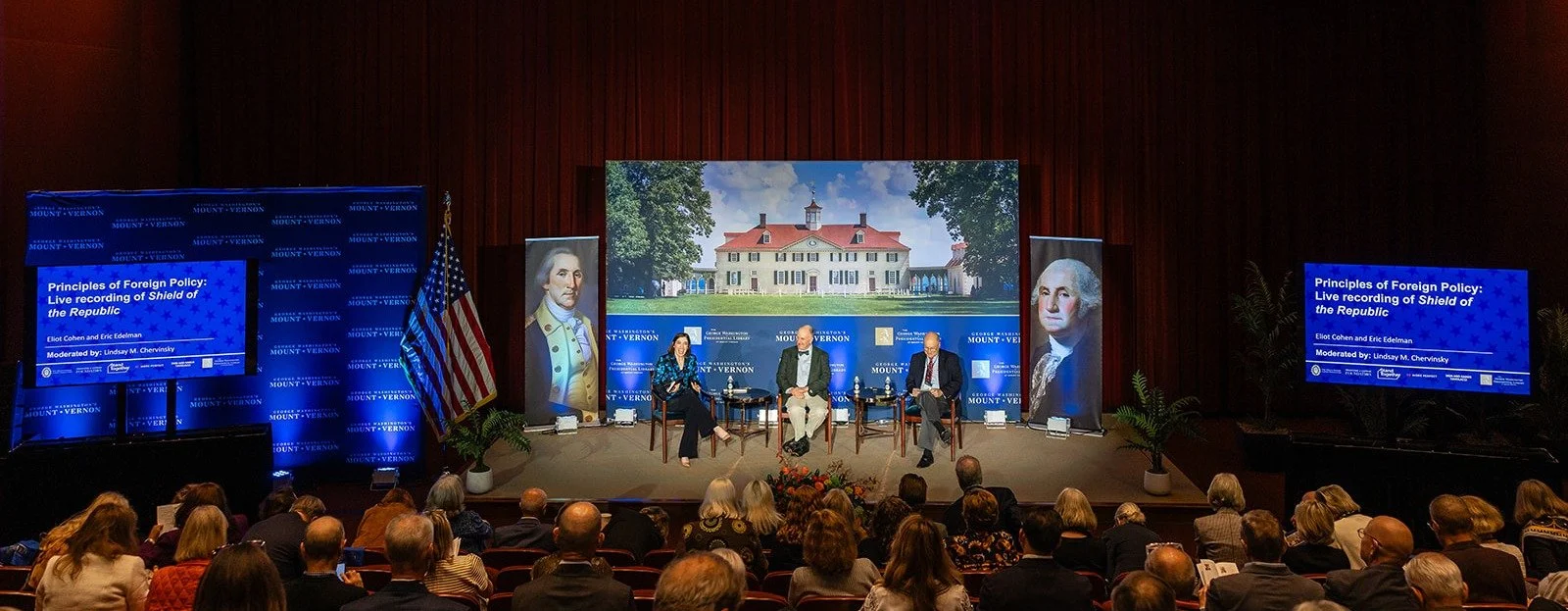
I will share links for all of the panels once they are released, but some are already on CSPAN. The opening program was recorded for the Politico Podcast and boy did that turn out to me timely:
And one of the sessions was a live recording of Shield of the Republic.
I was looking through my really old posts (before I transitioned to Substack) and found a post about the importance of humility and accountability in leaders. I’m going to include the post here, but then circle back to how these themes emerged at the Democracy Symposium and my updated thoughts today.
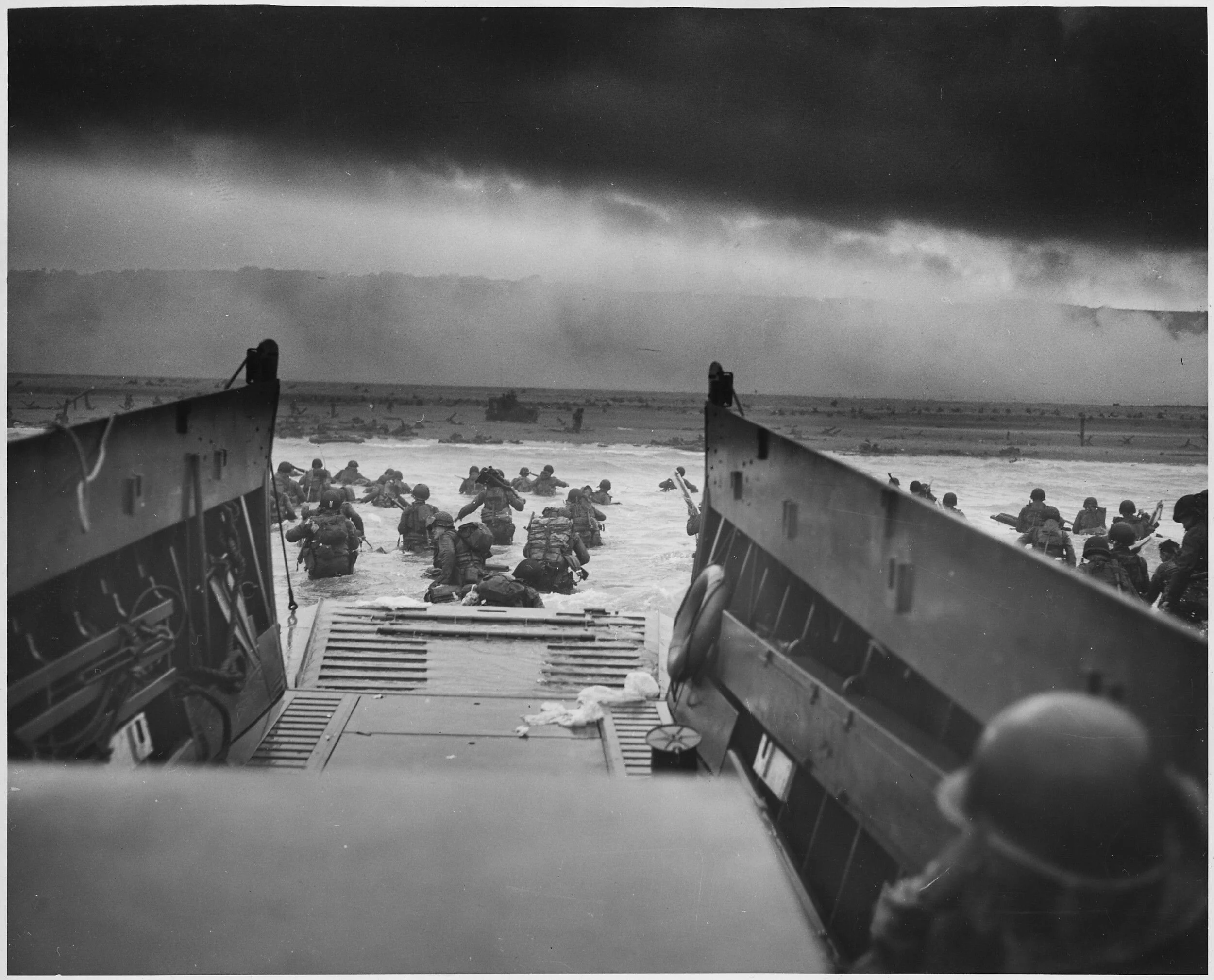
I originally wrote this post for a May release, with Memorial Day and the anniversary of D-Day on the horizon, which prompted reflection on service, duty, and valor—and what they reveal about leadership. One of my favorite stories from World War II comes from the early morning hours before Operation Overlord began.
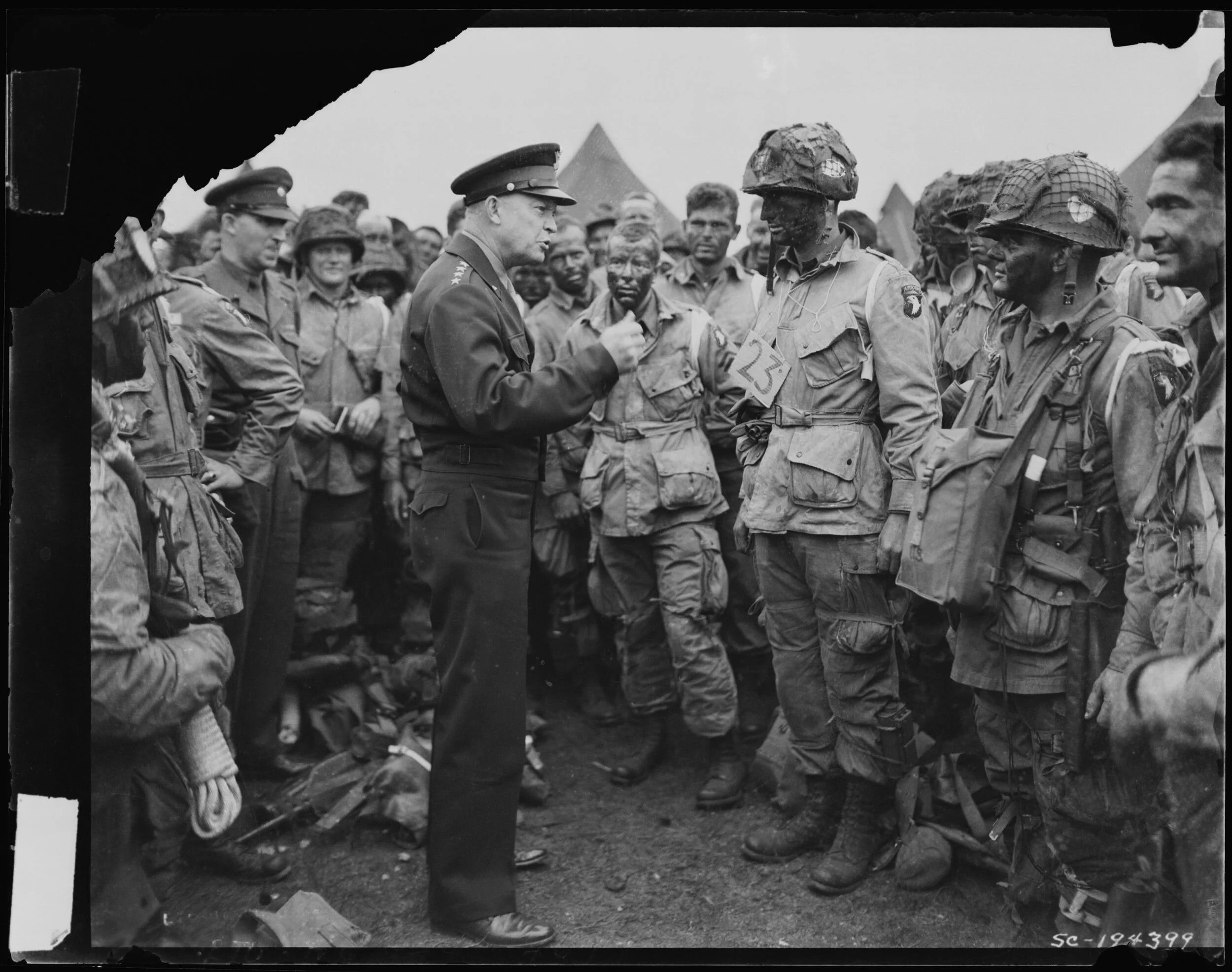
Courtesy of the Dwight D. Eisenhower Presidential Library
On June 5, Eisenhower visited with troops that were responsible for particularly dangerous tasks the next day. After a fitful night’s sleep, he woke up before the sun and penned this note, just in case D-Day went horribly awry:
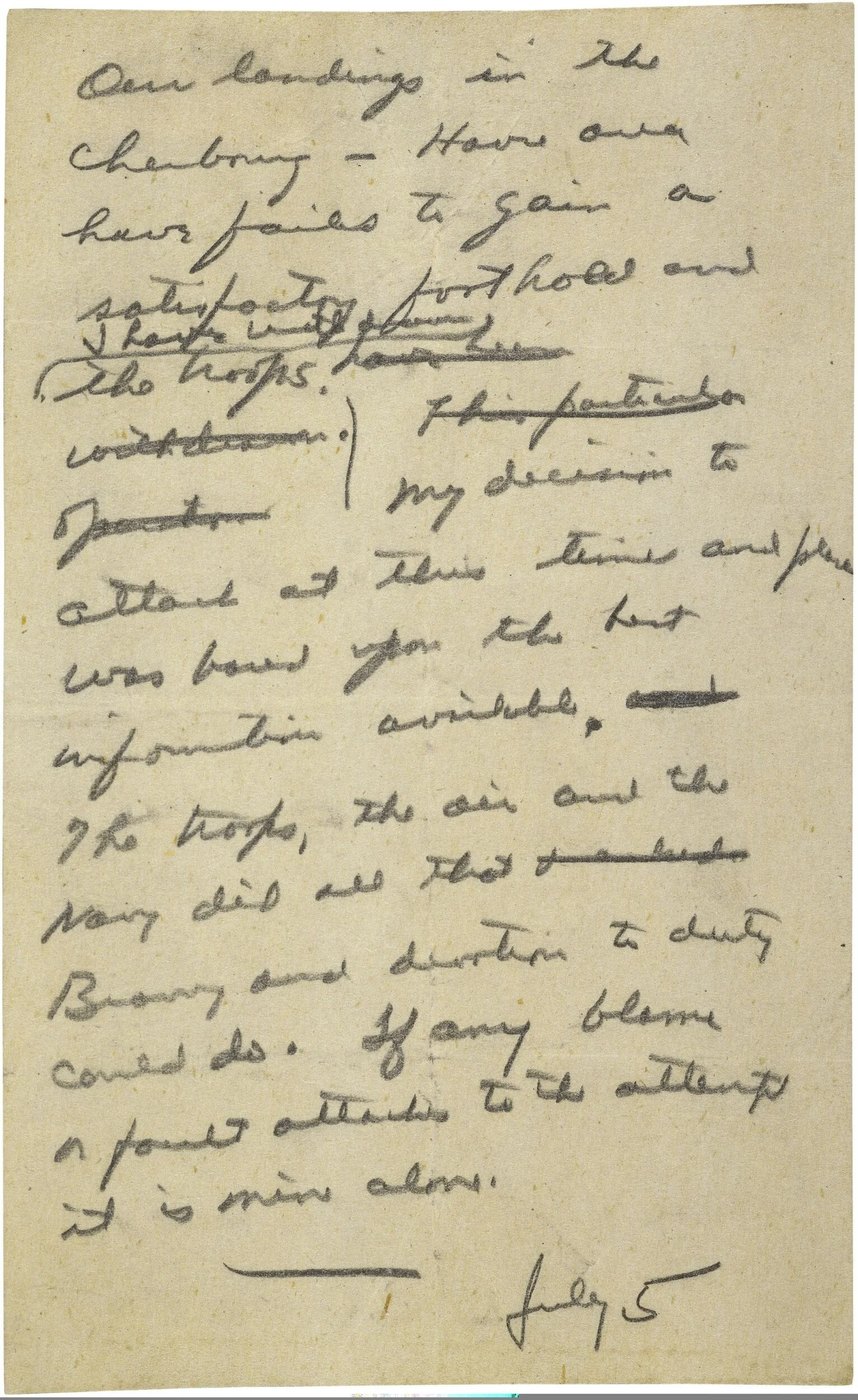
“In Case of Failure” Message Drafted by General Dwight Eisenhower in Case the D-Day Invasion Failed; 6/5/1944; Principal Files, 1916 - 1952; Collection DDE-EPRE: Eisenhower, Dwight D: Papers, Pre-Presidential; Dwight D. Eisenhower Library, Abilene, KS. [Online Version, https://www.docsteach.org/documents/document/in-case-of-failure, May 13, 2020]
“Our landings in the Cherbourg-Havre area have failed to gain a satisfactory foothold and I have withdrawn the troops. My decision to attack at this time and place was based upon the best information available. The troops, the air and the Navy did all that Bravery and devotion to duty could do. If any blame or fault attaches to the attempt it is mine alone.”
It’s a pretty extraordinary message at a time of extreme peril. Who knows what might have happened if D-Day had failed. Either way, Eisenhower wanted to make sure no one else bore the blame. While this letter is remarkable, it is actually part of a larger tradition of American leaders acknowledging their human fallibility and taking responsibility for their actions and those of the men and women they led.
By 1864, Lincoln had spent three years trying to find a general who would fight an all-out war against the Confederacy. In late February, Lincoln appointed Ulysses S. Grant to the rank of Lieutenant General. The last person to hold that position was George Washington in 1798. (Winfield Scott had been given the honorary title with “brevet” in front of it, but out of respect only; he did not occupy the position.) Congress confirmed Grant’s appointment on March 2, 1864.
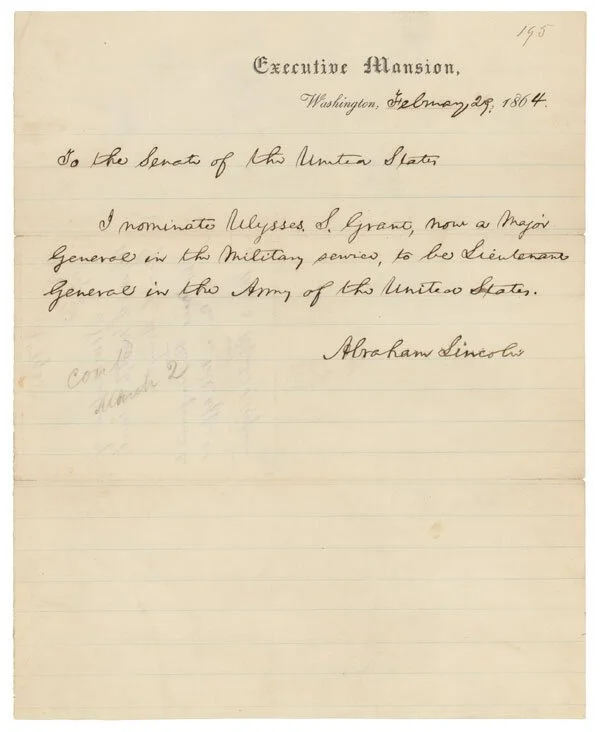
A few days later, Lincoln held a reception at the White House (like the one pictured below) in Grant’s honor, and the new commander of the Union armies gave a brief statement: “With the aid of the noble armies that have fought on so many fields for our common country, it will be my earnest endeavor not to disappoint your expectations. I feel the full weight of the responsibilities now devolving on me and know that if they are met, it will be due to those armies.”
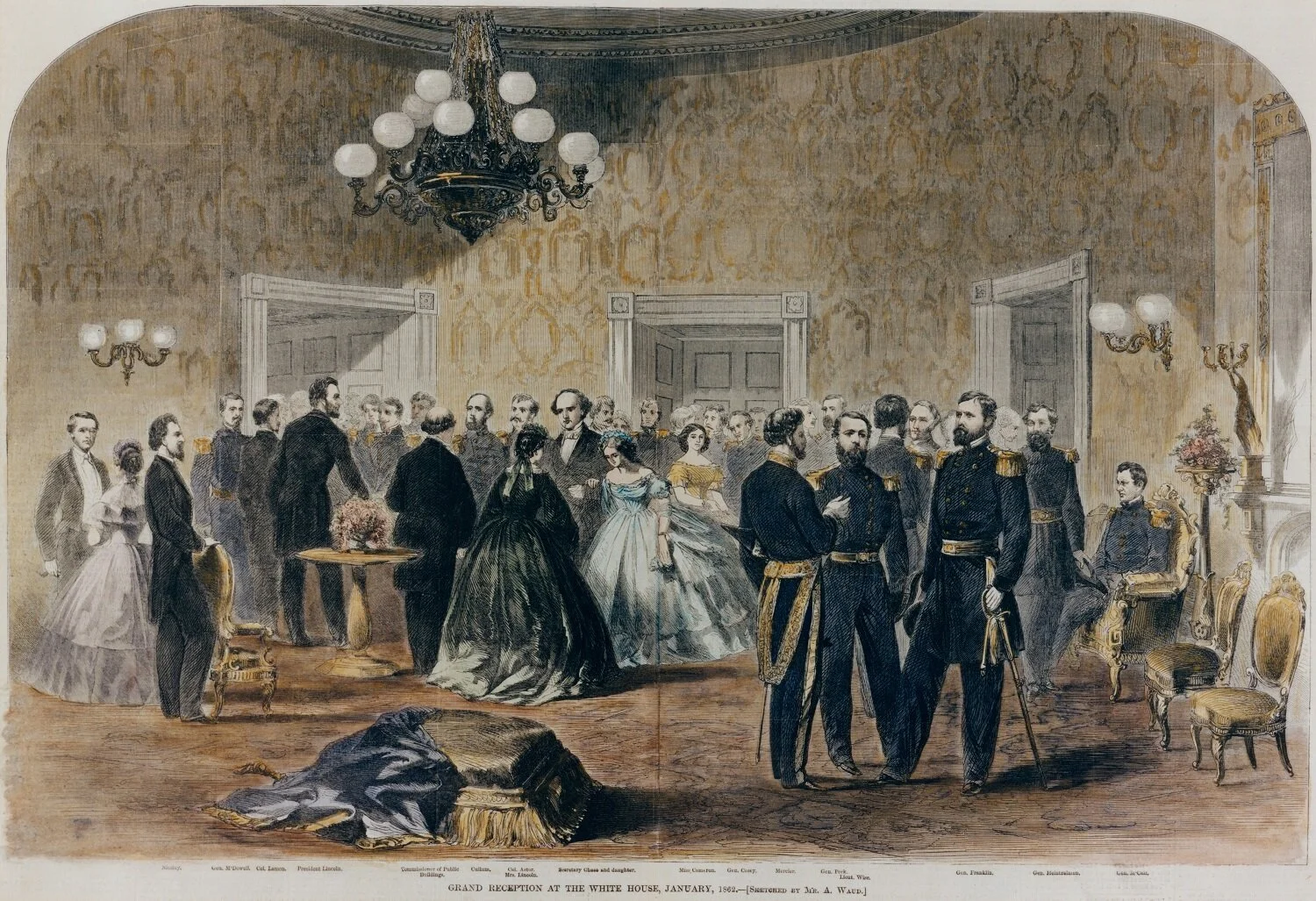
Alfred Waud, White House Collection/White House Historical Association
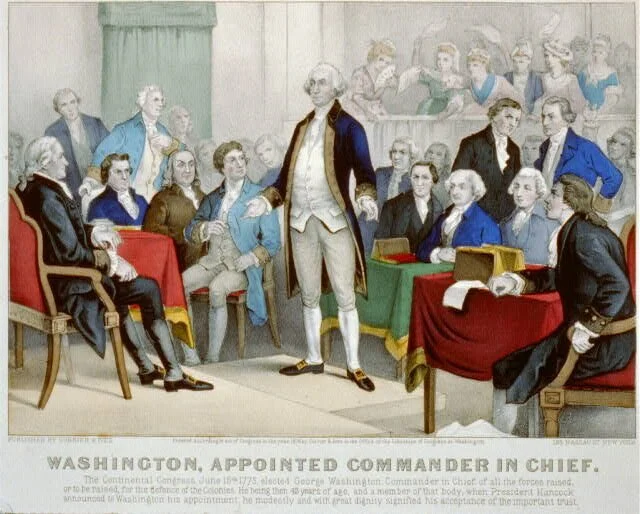
But the tradition actually goes back much farther. On June 16, 1775, Congress appointed George Washington the General and Commander-in-Chief of the American forces. In response, Washington delivered a brief statement: “Mr President, Tho’ I am truly sensible of the high Honour done me in this Appointment, yet I feel great distress, from a consciousness that my abilities & Military experience may not be equal to the extensive & important Trust: However, as the Congress desire i⟨t⟩ I will enter upon the momentous duty, & exert every power I Possess In their service & for the Support of the glorious Cause: I beg they will accept my most cordial thanks for this distinguished testimony of their Approbation. But lest some unlucky event should happen unfavourable to my reputation, I beg it may be rememberd by every Gentn in the room, that I this day declare with the utmost sincerity, I do not think my self equal to the Command I ⟨am⟩ honoured with.”
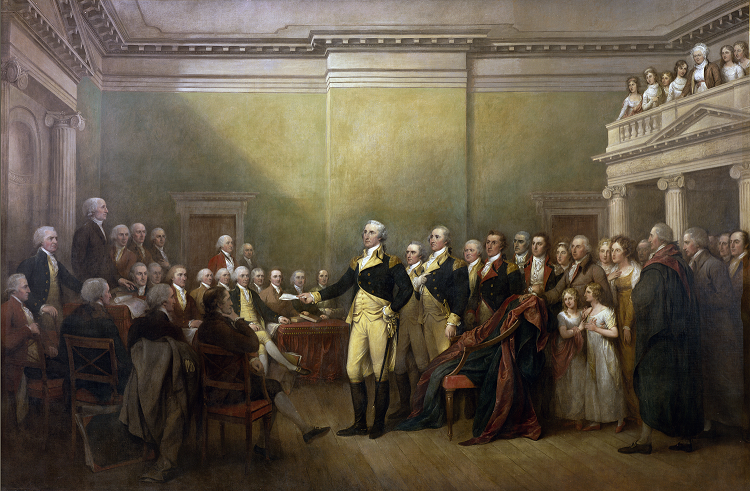
When he returned his commission eight years later on December 23, 1783, he did not ask for fame or fortune. Instead, he asked Congress to acknowledge those who had served under his leadership: “While I repeat my obligations to the Army in general, I should do injustice to my own feelings not to acknowledge in this place the peculiar Services and distinguished merits of the Gentlemen who have been attached to my person during the War. It was impossible the choice of confidential Officers to compose my family should have been more fortunate. Permit me Sir, to recommend in particular those, who have continued in Service to the present moment, as worthy of the favorable notice & patronage of Congress.”
These three moments suggest to me that humility and responsibility are two markers of great American leadership. They demonstrated an awareness that as Commander-in-Chief they represented something much larger than their own reputations, but rather the combined efforts of all the people they led.
Which brings me back to today. One of the key themes that emerged at the Democracy Symposium was the importance of character. Character includes things like accountability and humility. One of the panels focused on the historic presidency and it was a delight to share the stage with Doug Bradburn, Karl Rove, and Mark Updegrove. You can see that we had fun.
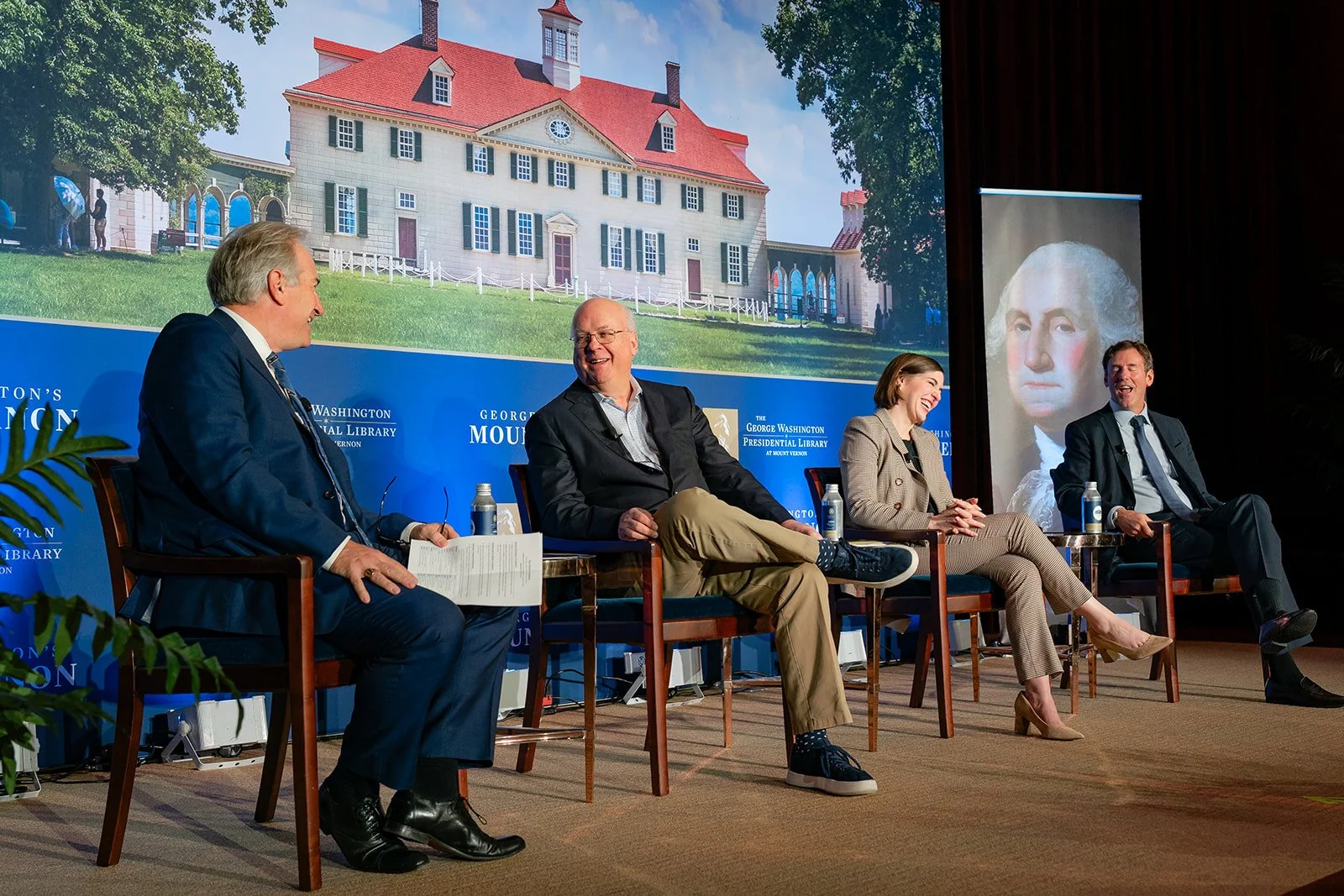
I argued on the panel that we should stop picking presidents based on specific policies or even how they perform in debates. Instead, we should focus on character. Rarely are presidencies defined by issues from the campaign. For example, President George W. Bush largely ran on domestic issues, but 9/11 fundamentally changed his presidency. President Joe Biden ran on restoring normalcy, and then Russia invaded Ukraine. The only thing we can be sure of is character. The best presidents—and the best leaders—have it.
The symposium also elevated the importance of civics and history education. I think character and the study of history are related. I think the American people will better understand the need for character if they know our history.
I’m going to write more about some of the tangible fixes that emerged from these conversations, but that seems like a good call to action for now. Let’s go forth, read history, and share it!
Perhaps drop in the comments below your favorite recent history reads and we can get a little list going. The holidays are coming up and I think everyone welcomes book suggestions for gifts.