25 Years After 9/11: What Bush Got Right About Religious Freedom
September 2026 Imperfect Union
The 25th anniversary of 9/11 is next week and there will be many important reflections on the lives lost and examinations of how the world, and the United States’ place in it, has changed since then. I think one critical part of the story is often under appreciated and has relevant echoes in our current moment.
On September 17, 2001, President George W. Bush visited the Islamic Center of Washington, D.C., to deliver remarks on the importance of religious freedom and deter rising attacks on Muslim Americans. Religious liberty is one of our most prized values, and it is enshrined in the Constitution through the First Amendment. Like so many of our foundational principles, however, legal protections for religious liberty aren’t enough. They depend on our culture to protect them as a lived reality for all Americans. Our leaders, and their rhetoric, set the tone.
In the days after the terrorist attack on September 11—the deadliest on American soil—reports of violence against Muslim Americans and Sikh Americans, who were mistaken for Muslim, spiked dramatically. President Bush’s team selected the Islamic Center of Washington, D.C. for its connection to the White House and its traditional Islamic architecture. President Dwight D. Eisenhower had laid the cornerstone for the building in 1957.
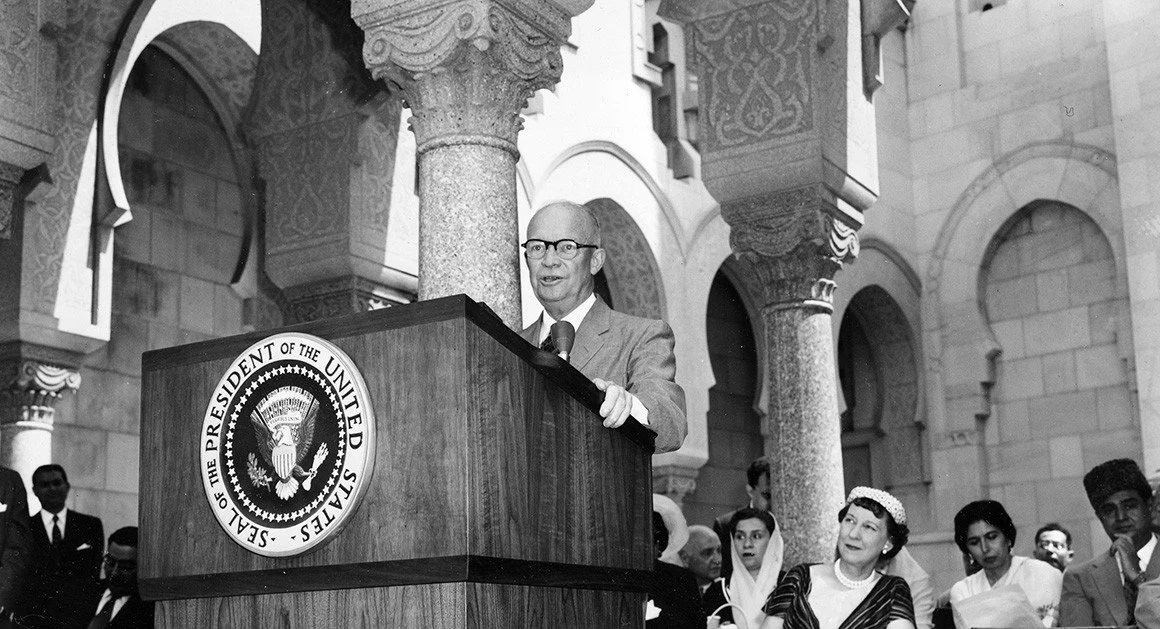
President Eisenhower at the dedication of the Islamic Center
Speaking in front of intricately tiled arches, President Bush insisted that “the face of terror is not the true faith of Islam.” He insisted that Americans treat their neighbors with respect regardless of their faith or how they dress. He condemned those who “feel like they can intimidate our fellow citizens to take out their anger.” These assailants “represent the worst of humankind, and they should be ashamed of that kind of behavior.”
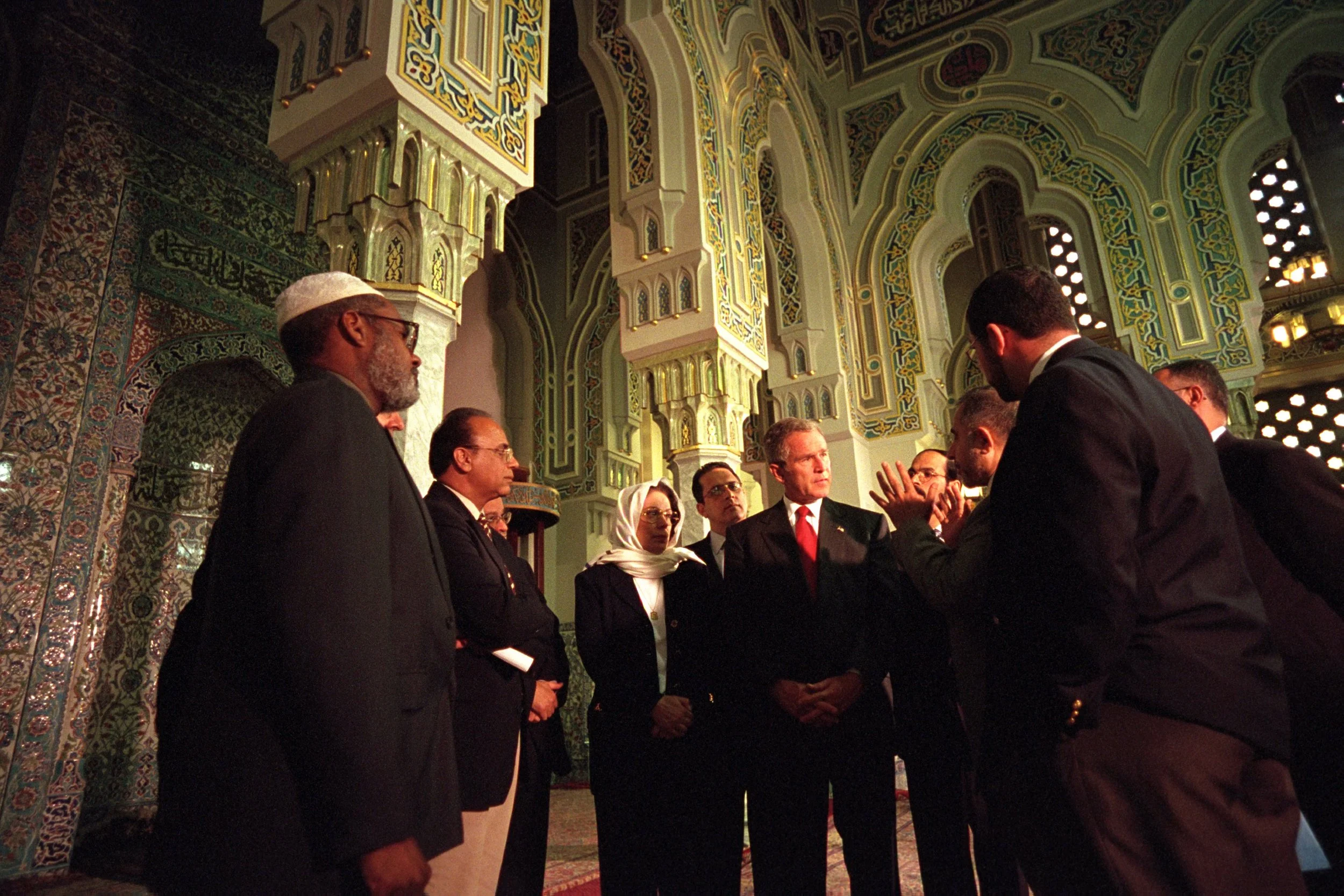
President Bush at the Islamic Center on September 17, 2001
President Bush’s leadership in the days after the attack reflected his awareness of presidential successes and failures in the past. On May 3, 2001, four months before the terrorist attack, President Bush referenced the foundations of religious liberty laid by our first president. While visiting with the American Jewish Committee, he quoted George Washington’s famous letter to the Touro Synagogue in Newport, Rhode Island.
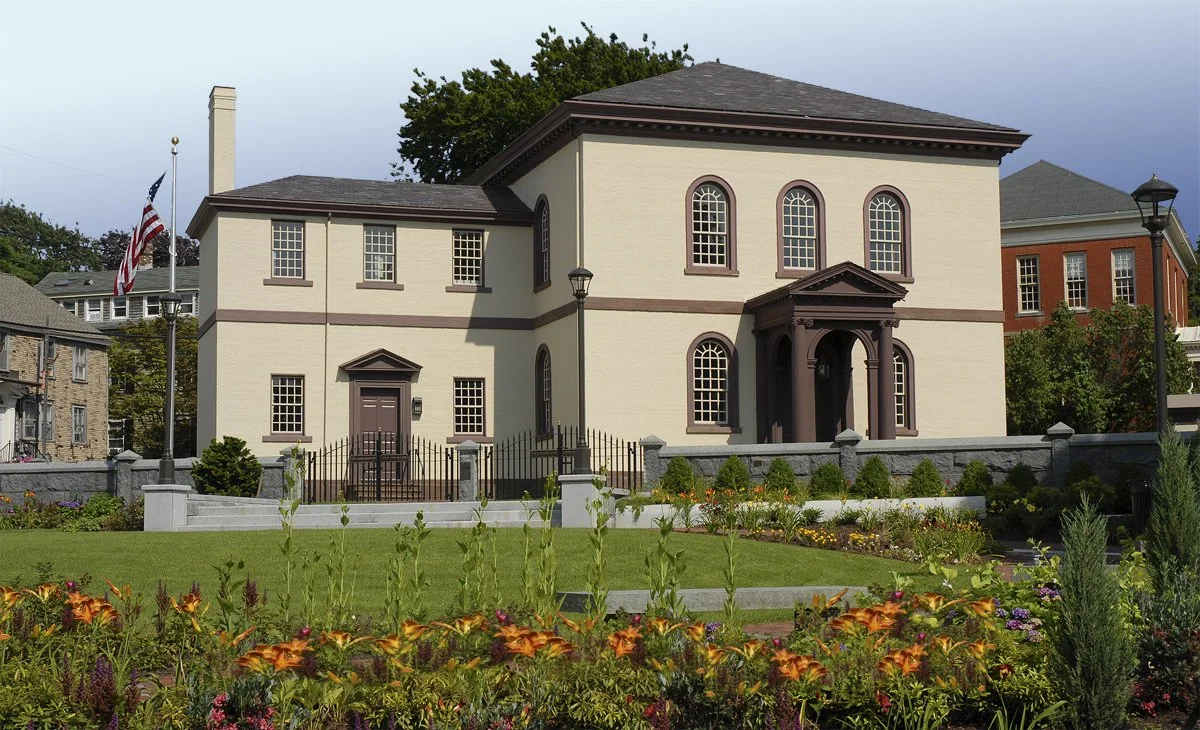
Tuoro Synagogue, Image Courtesy of NPS
In August 1790, President George Washington visited Rhode Island to celebrate the state’s ratification of the Constitution. During Washington’s stop in Newport, he received a series of addresses from the community, including a letter from the Hebrew Congregation. The address gave thanks for the “blessings of civil and religious liberty which we enjoy under an equal and benign administration,” which previous governments had not afforded them.
The Hebrew Congregation was one of the oldest in the United States, and Rhode Island had been one of the most welcoming states for religions other than the dominant strain of Protestant Christianity. However, there was no federal protection for religious freedom. The previous summer, Congress had passed the first amendments to the Constitution, but the states had not yet ratified what would become known as the Bill of Rights.
The next day, George Washington replied to the Synagogue, affirming their belief that the new government would protect religious freedom. “Happily the Government of the United States, which gives to bigotry no sanction, to persecution no assistance, requires only that they who live under its protection should demean themselves as good citizens, in giving it on all occasions their effectual support.” Washington then took one step further. The new United States would not just offer religious toleration “as if it was by the indulgence of one class of people,” but would treat religious liberty as “the exercise of their inherent natural rights.” He articulated a vision for a nation where there was no religious hierarchy, but where each person was welcome to worship according to their own beliefs.
In the aftermath of 9/11, Bush also drew on his knowledge of darker moments in American history. In the spring of 2001, President Bush spent time with Secretary of Transportation Norm Mineta at Camp David. Mineta shared stories of his family’s incarceration at the Heart Mountain Relocation Center near Cody, Wyoming, during World War II.
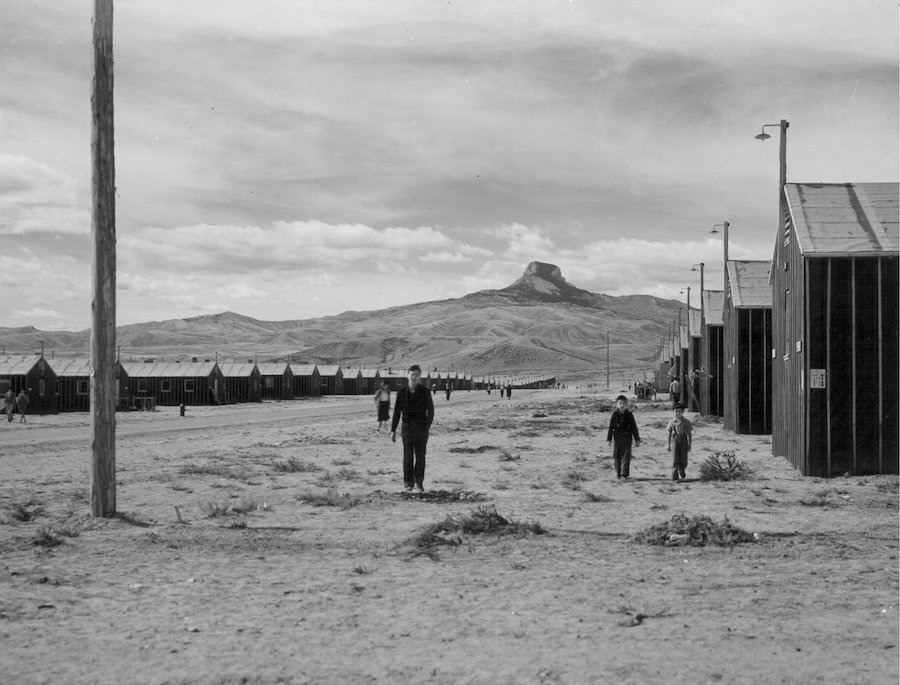
Heart Mount Internment Camp
Mineta’s parents had immigrated from Japan and were barred from becoming naturalized citizens. Norm was an American citizen and wore his Cub Scout uniform to demonstrate his patriotism when he boarded the train to the internment camp.
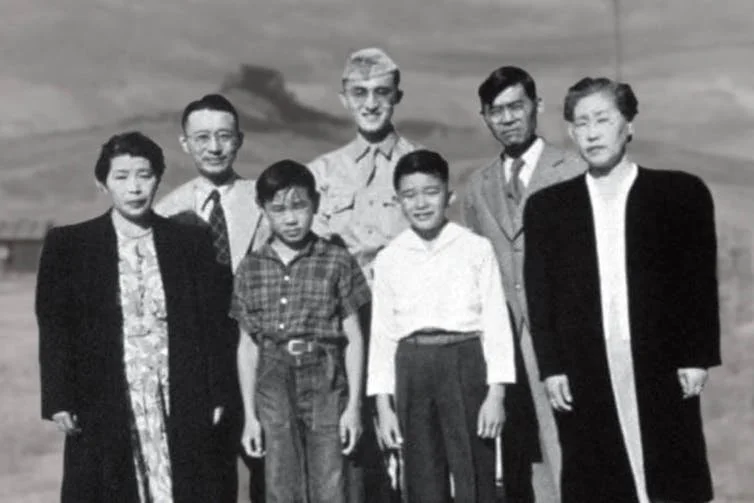
The Mineta family was sent to a camp surrounded by barbed wire and guard towers near Cody, Wyoming. Pictured here with relatives and friends, Norman Mineta is in the front row, second from right, in the white shirt.
Mineta Family Archives, Heart Mountain Wyoming Foundation via Mineta Legacy Project
In a cabinet meeting the morning after September 11, President Bush said “we want to make sure that what happened to Norm in 1942 doesn’t happen today.” The administration rejected calls to detain Muslims or ban them from public flights, despite growing pressure for such extreme action.
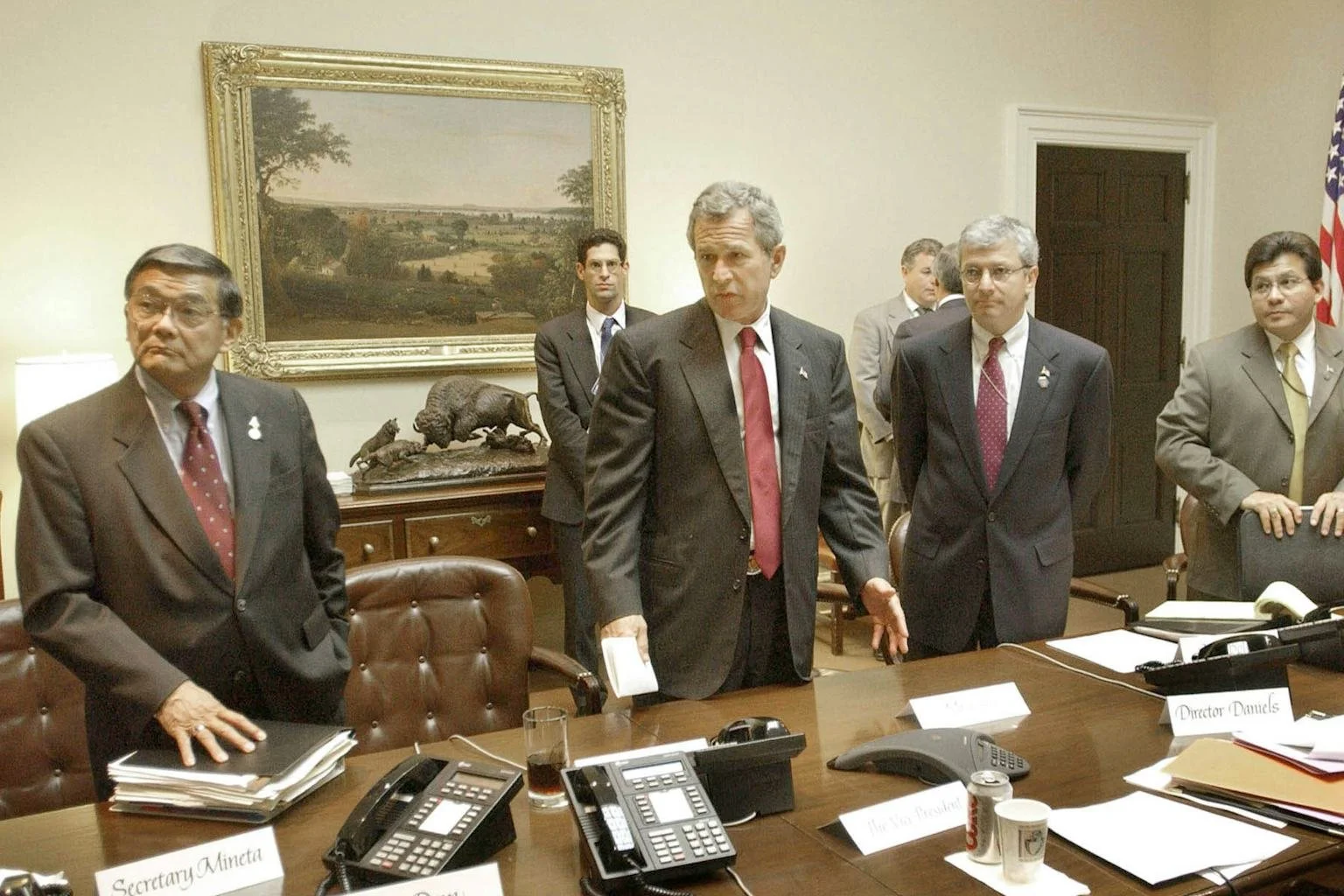
Secretary Mineta in a cabinet meeting with President Bush on Sept. 17, 2001
Although the demonization of Japanese Americans was rooted in ethnicity more than religion, it reflected the same desire to categorize certain citizens as “other,” rather than full Americans. President Franklin D. Roosevelt’s Executive Order 9066, which ordered the forced removal and detainment of Japanese Americans from the West Coast, was upheld by the Supreme Court in Korematsu v. United States in 1944. But it was wrong.
The best presidents have understood that the law isn’t always enough. They set the tone and play an outsized role in shaping our culture. To be sure, they cannot prevent the actions of others. Racial attacks and bigotry did not disappear after Bush’s speech, but evidence suggests they did decline. And obviously, President Bush went on to make some significant mistakes. I would never suggest otherwise. But at the very least, for the people experiencing hostility, it must have meant something to hear the president speak on their behalf.
Twenty-five years after 9/11, antisemitism and anti-Muslim rhetoric are on the rise, especially in political discourse. This anniversary is an important opportunity to mourn the loss of our fellow citizens and the brave first responders who died trying to save them, but it is also a valuable moment to reflect on the role of leaders, from community elders to president, in shaping our national character and upholding our founding values.